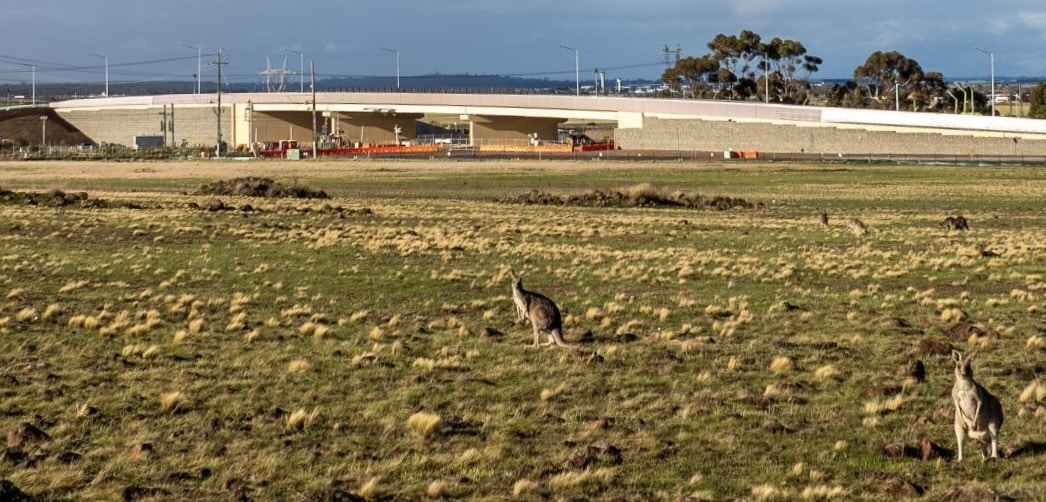


The Calder Park Drive grade separation project in Victoria, Australia, used AIL retaining wall systems to support a new road bridge while reducing environmental impact, improving constructability and creating a distinctive architectural finish.

As part of Victoria’s Level Crossing Removal Project, with the Fulton Hogan – Metropolitan Roads Program Alliance partnership, the Calder Park Drive crossing required a new road bridge with retaining wall systems that could meet both performance and environmental objectives. Both AIL’s MSE Precast Panel Walls and Wire Walls were used in the approach ramp abutments.
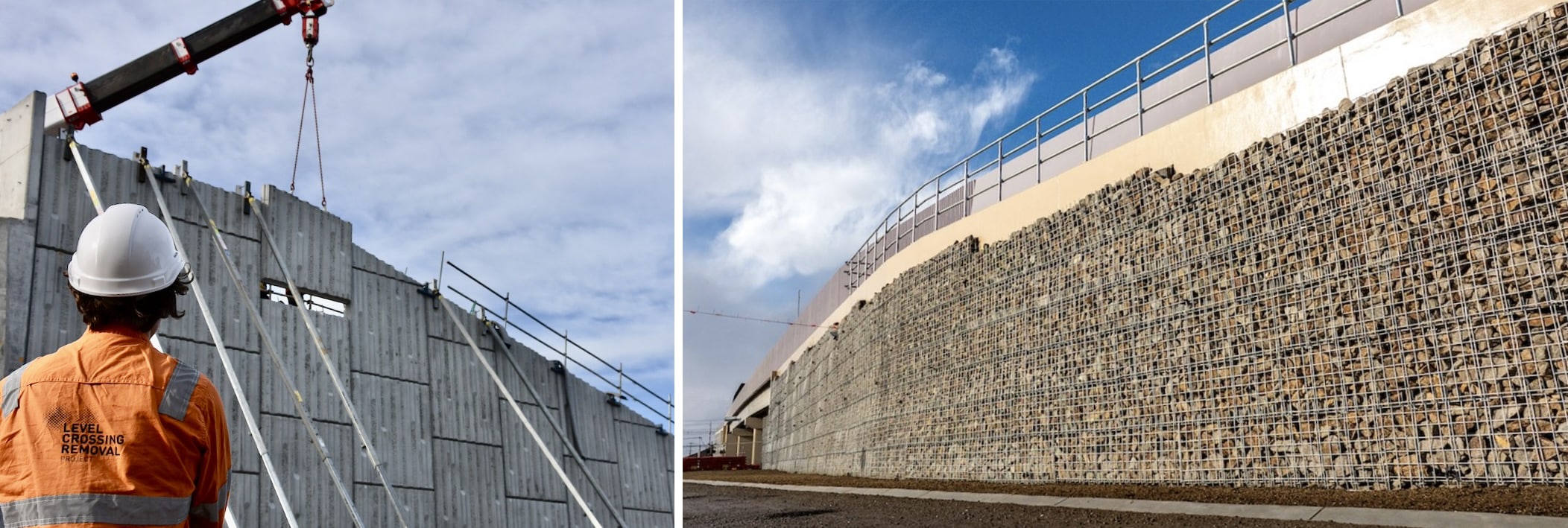
AIL supplied wall systems that supported efficient delivery and dependable site performance. We were pleased to be working with Rockfield Technologies Australia as the wall designer, and our partner, Global Synthetics*, on logistics and site coordination.
Reducing carbon impact with GFRP technology and Aerolite fill
Two design choices helped reduce the project’s environmental footprint while maintaining structural performance: GFRP reinforcement in the precast panels and lightweight Aerolite fill in the wall system.
Glass Fibre Reinforced Polymer (GFRP) replaced standard steel reinforcement inside the concrete panels. Because GFRP is four times lighter than steel, it reduced transport loads and associated emissions. The project’s 264 GFRP-reinforced panels represented the largest use of this technology in Victoria at the time.
View project video on innovations >
Aerolite fill, which is approximately 40% lighter than standard crushed rock, further reduced the overall weight of the structure. That lower weight reduced the amount of Grid-Strip Soil Reinforcement required and helped lower emissions tied to material transport, handling and steel production.
Custom architectural panel design inspired by the local landscape
Alongside its structural and environmental benefits, the project also delivered a site-specific architectural treatment. The retaining wall design drew on the rock formations of Organ Pipes National Park, helping the bridge respond to its local setting as well as its engineering requirements. The design team visited the park to capture the look, colour and texture of the formations, with the final effect completed through panel painting.
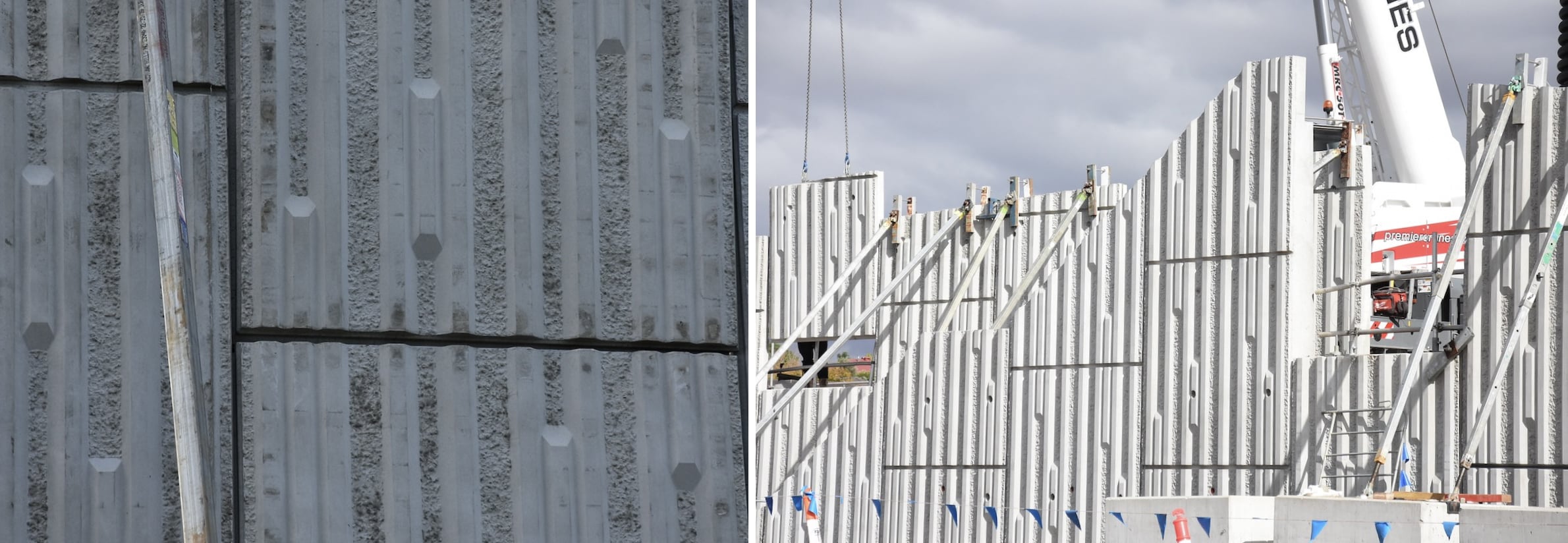
AIL’s MSE Precast Panel Wall design was integrated early in the project, allowing the team to refine and optimize the solution as the design progressed. ACP’s coordination within the precast workflow supported production planning, site readiness and consistent delivery quality.
MSE retaining wall performance and construction efficiency
AIL’s standardized MSE wall design helped simplify construction and support efficient installation. Combined with lighter materials and alternative reinforcement, the system reduced environmental impact while maintaining a 100+ year design life.
Together, these features make the Calder Park Drive project a strong example of how retaining wall systems can support project delivery, lower-carbon construction and context-sensitive design in major transport infrastructure.
*Australian Construction Products (ACP) was purchased by the Jaybro Group and now operates under the name Global Synthetics.